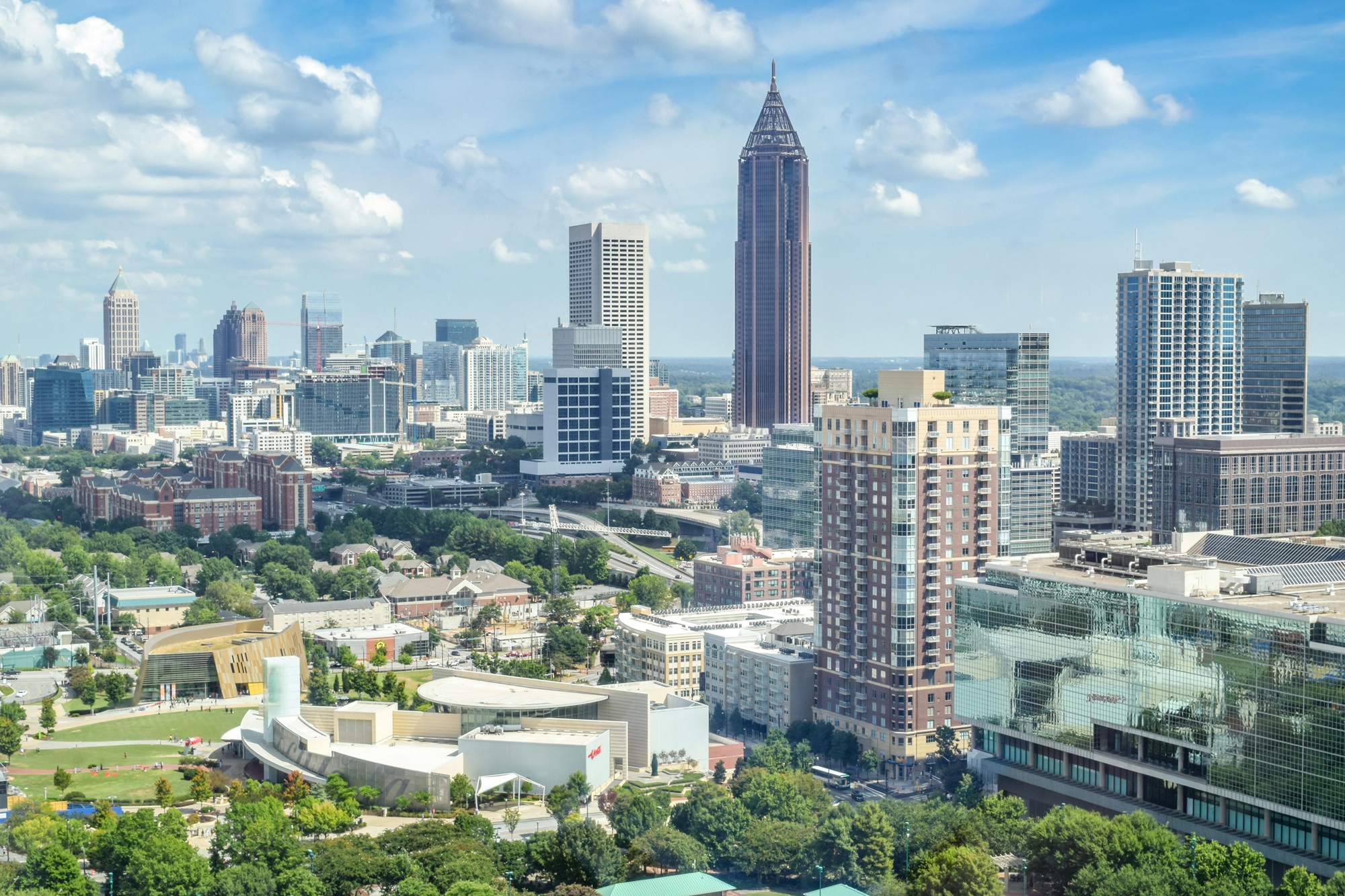
Nestled just east of downtown Atlanta, Oakland Cemetery stands as a verdant testament to the city’s layered past. This 88-acre expanse, often called Atlanta’s first public park, weaves together tales of triumph, tragedy, and transformation.
Origins in a Growing City
In 1850, as Atlanta expanded beyond its modest boundaries, city leaders sought a new burial ground to replace the overcrowded Peachtree Street cemetery. They purchased six acres of rolling farmland from local landowner Alfred W. Wooding for $75 an acre, renaming it Atlanta Cemetery—later Oakland in 1872 for its abundant oaks and magnolias.
The first burial was Wooding’s wife, interred even before the official handover, marking the site’s immediate role in communal mourning. Designed as a “garden cemetery” inspired by Mount Auburn in Massachusetts, it featured scenic landscapes, exotic plants, and grand monuments influenced by Greek and Egyptian styles—shifting burial from somber churchyards to inviting parks where families picnicked among the graves.
By 1884, all plots sold out, yet expansions continued, growing to 48 acres of green space amid urban sprawl. Today, it holds over 70,000 souls, with only about 40,000 marked graves, reflecting both affluence and anonymity.
A Mirror to Atlanta’s Society
Oakland’s layout reveals the era’s social divides. Divided into “neighborhoods,” it included segregated sections: a Jewish area, an African American plot established in 1852 for enslaved people and the indigent, and pauper grounds for the white poor.
By the Civil War, 869 African Americans—mostly children—rested in the Black section, underscoring the harsh realities of slavery in antebellum Atlanta. Post-war, it became the city’s primary burial site for residents, travelers, and soldiers from both sides, with distinct Confederate and Union plots.
This stratification persisted into the 20th century, but restoration efforts now highlight inclusivity, including recent leadership like the first Black director of horticulture, Abra Lee, who tends its gardens while confronting its racist history.
Civil War Shadows and Confederate Legacy
The 1860s scarred Oakland deeply. Atlanta’s siege and Sherman’s March left thousands dead, filling the cemetery with Confederate soldiers honored in a dedicated section. Post-war articles from 1869 praised it as a hallowed ground, with elaborate memorials erected by grieving survivors.
Union soldiers found rest in a separate plot, a quiet nod to reconciliation amid division. These battlegrounds within the grounds symbolize Atlanta’s pivotal role in the war, burned and reborn from ashes.
Victorian families visited for outings, blending grief with leisure amid blooming gardens—exotic plants wintered in greenhouses to maintain year-round beauty.
Notable Residents and Cultural Icons
Oakland brims with Atlanta’s luminaries. Author Margaret Mitchell, whose Gone with the Wind immortalized the city’s spirit, shares space with golf legend Bobby Jones, six Georgia governors, and 25 Atlanta mayors, including Maynard Jackson.
Morris Brown College founder Wesley John Gaines represents Black education pioneers. Elaborate mausolea and sculptures—marble obelisks, urns, and angels—dot the landscape, showcasing Victorian artistry and personal stories etched in stone.
These “residents” draw history buffs, offering glimpses into innovation, politics, and culture that shaped the New South.
Decline and Revival Efforts
By the mid-20th century, neglect took hold. Urban encroachment, weather, and vandalism eroded the once-pristine garden; overgrown paths and toppled stones marred its splendor.
A turning point came in 1976: Listed on the National Register of Historic Places, the nonprofit Historic Oakland Foundation partnered with the city for restoration. Volunteers trimmed vines, repaired monuments, and replanted Victorian flora, reviving it as a cultural gem.
Today, spanning 88 acres at 248 Oakland Avenue, it’s maintained by the city, foundation, and dedicated gardeners, ensuring its role as both park and preserve.
Modern Role as Public Treasure
Now Atlanta’s oldest green space, Oakland hosts guided tours, events, and weddings amid its oaks. Year-round walks explore sections like the Bell Tower landmark and diverse mausolea, blending education with serenity.
Annual events like Twilight Tours and garden festivals draw crowds, while its 70,000 interments—from paupers to pioneers—offer a living archive. Volunteers and pros like Abra Lee sustain its beauty, making it a vital urban oasis.
In March 2026, amid ongoing preservation, it remains a bridge between past and present.
Enduring Legacy
Oakland Cemetery transcends death, embodying Atlanta’s resilience—from a six-acre plot to a National Historic site. Its gardens whisper stories of division healed by time, inviting all to wander its paths and connect with history.
The written content on this page was generated by perplexity.ai.
There are places in every city where history breathes through the bricks, where the streets themselves seem to tell stories of resilience, ambition, and triumph. In Atlanta, Georgia, that place is Auburn Avenue — affectionately known as “Sweet Auburn.” Once called “the richest Negro street in the world” by Fortune magazine in 1956, this one-mile stretch east of downtown Atlanta has long been a beating heart of African American culture, business, and progress.
From its rise in the early 1900s to its critical role in the Civil Rights Movement, Sweet Auburn stands today not just as a district, but as a living museum — a reminder of how determination and community spirit shaped a neighborhood that changed the course of American history.
A Legacy Born from Adversity
To understand the soul of Sweet Auburn, you must first understand the story of Atlanta’s African American community in the decades following the Civil War. After emancipation, formerly enslaved people flocked to Atlanta seeking opportunity, education, and self-determination. While segregation and systemic racism continued to restrict access to economic and political power, Black Atlantans built their own parallel world — one of churches, schools, and thriving businesses.
By the early 20th century, Auburn Avenue emerged as the center of this world. The district was a place where African Americans could own property, run banks, open law offices, and attend world-class churches. It became a symbol of possibility in a time when much of the nation denied them equality.
“Sweet Auburn” wasn’t just a nickname — it was a declaration of pride. It represented a self-sustaining community where hard work, unity, and entrepreneurship created wealth and dignity in the face of prejudice.
Building Black Prosperity: The Rise of “Sweet Auburn”
At the heart of Sweet Auburn’s success were the Black-owned businesses and institutions that flourished during segregation. Among the most notable was the Atlanta Life Insurance Company, founded by Alonzo Herndon in 1905. Born into slavery, Herndon rose to become Atlanta’s first Black millionaire. His company provided affordable insurance to African Americans who were often denied by white-owned firms, and his headquarters on Auburn Avenue became a beacon of economic empowerment.
Another key player was the Atlanta Daily World, founded in 1928 by William Alexander Scott II. As one of the first successful Black daily newspapers in the country, it gave a voice to the community and chronicled both the struggles and victories of African Americans in Atlanta and beyond.
Auburn Avenue was also home to Citizens Trust Bank, Mutual Federal Savings and Loan, and countless barber shops, restaurants, and retail stores that served as gathering places for residents. These businesses created jobs, inspired entrepreneurs, and fueled a sense of pride that radiated throughout the city.
During the early-to-mid 20th century, Sweet Auburn wasn’t just a commercial hub — it was the embodiment of Black excellence and independence. The neighborhood became a shining example of what could be achieved through perseverance and collective effort.
The Spiritual Heart of the Community
Beyond its financial success, Sweet Auburn was deeply rooted in faith and community service. Churches played an essential role in both the social and political lives of residents, offering hope, education, and leadership.
The Ebenezer Baptist Church, established in 1886, became one of the most influential congregations in America. Under the leadership of Reverend Martin Luther King Sr., and later his son, Dr. Martin Luther King Jr., Ebenezer became a center for social activism and moral leadership during the Civil Rights Movement.
Nearby, Big Bethel AME Church, founded in 1847, stood as another cornerstone of faith and empowerment. It housed educational institutions and hosted meetings that shaped the city’s civil rights strategy. These churches, along with many others in the district, provided spiritual grounding and a powerful sense of unity that propelled the movement forward.
The sound of gospel music echoing through the streets of Sweet Auburn was more than melody — it was the soundtrack of hope, faith, and freedom.
The Civil Rights Movement: A Turning Point in History
By the 1950s and 1960s, Sweet Auburn had evolved into the headquarters for some of the most pivotal moments in the Civil Rights Movement. It was home to leaders, organizers, and institutions that would change the course of American democracy.
Dr. Martin Luther King Jr., born and raised on Auburn Avenue, drew much of his inspiration and support from the neighborhood. His childhood home still stands today, preserved as part of the Martin Luther King Jr. National Historical Park. This site includes his birth home, The King Center, and the Ebenezer Baptist Church, where he preached and organized.
During the movement, Auburn Avenue became the nerve center for marches, meetings, and campaigns that challenged segregation and inequality across the South. Civil rights leaders such as John Lewis, Ralph David Abernathy, and Andrew Young often gathered here, transforming Sweet Auburn into a hub of activism and change.
The neighborhood’s legacy of self-reliance and unity made it the perfect foundation for a movement that demanded justice — not through violence, but through perseverance and moral conviction.
Decline and Renewal: The Changing Face of Sweet Auburn
Like many historic neighborhoods across America, Sweet Auburn experienced decline in the latter half of the 20th century. The construction of Interstate 75/85 in the 1960s split the district in half, disrupting its economic flow and displacing residents. As integration opened new opportunities across the city, many middle-class families and business owners moved away.
By the 1980s, much of the once-bustling avenue was marked by shuttered storefronts and neglected buildings. However, the spirit of Sweet Auburn never truly faded. Local preservationists, community organizations, and city leaders began efforts to restore its historic landmarks and revive its legacy.
The creation of the Martin Luther King Jr. National Historical Park in 1980 played a crucial role in renewing interest in the area. Visitors from around the world began to walk the same streets where Dr. King once lived and worked, breathing new life into the community. Restoration projects followed, including the rehabilitation of the Odd Fellows Building, Prince Hall Masonic Temple, and other architectural treasures that had defined the avenue’s golden age.
Today, Sweet Auburn is in the midst of a cultural and economic resurgence — a blend of the old and new that honors its past while embracing Atlanta’s vibrant future.
A Living Landmark: What to See and Experience Today
Visitors to Sweet Auburn can step into a world where history and modernity coexist beautifully. The district’s historic charm is preserved in its brick facades, while murals and street art bring a burst of contemporary energy that reflects Atlanta’s creativity and diversity.
Here are some of the must-see landmarks that keep Sweet Auburn’s spirit alive:
The Martin Luther King Jr. National Historical Park: A powerful experience that includes Dr. King’s birth home, the Ebenezer Baptist Church, and the King Center, where visitors can pay tribute to his legacy.
Apex Museum (African American Panoramic Experience): Showcasing African and African American history through engaging exhibits that celebrate heritage and innovation.
The Royal Peacock Lounge: A legendary nightclub that hosted performers like James Brown, Ray Charles, and Gladys Knight, offering a glimpse into the district’s musical past.
Big Bethel AME Church: The oldest African Methodist Episcopal congregation in Atlanta, still standing strong as a beacon of faith.
Atlanta Daily World Building: Home of one of the oldest Black newspapers in the country, symbolizing the power of journalism in shaping change.
Streetcar Tour of Sweet Auburn: Atlanta’s modern streetcar system connects visitors to many of these historic sites, offering an easy and scenic way to explore.
Walking through Sweet Auburn today is like turning the pages of a living history book — each building, mural, and monument tells a story of resilience, creativity, and community pride.
The Heartbeat of Atlanta’s Culture
Sweet Auburn’s influence extends beyond history — it continues to shape Atlanta’s culture and identity. From food and festivals to art and music, the district remains a vibrant hub of expression and connection.
Every year, the Sweet Auburn Springfest draws thousands of visitors who come to celebrate the neighborhood’s legacy through live performances, local vendors, and community events. The festival showcases everything that makes Sweet Auburn special — diversity, creativity, and unity.
New businesses and cultural spaces are also emerging, blending historic preservation with innovation. Cafés, galleries, and co-working spaces now share blocks with historic landmarks, proving that progress and preservation can thrive side by side.
Sweet Auburn’s revival is more than urban renewal — it’s a reclamation of heritage, a tribute to those who built a community from the ground up, and a promise to keep its spirit alive for generations to come.
Conclusion: The Soul of a City That Refuses to Forget
Sweet Auburn is more than a historic district — it’s the soul of Atlanta. It represents the strength, creativity, and resilience of a community that refused to be defined by limitation. From the days of segregation to the triumphs of the Civil Rights Movement, this neighborhood has stood as a powerful symbol of what can be achieved through unity, hard work, and faith.
Walking down Auburn Avenue today, you can still feel the echoes of the past — the footsteps of leaders, the hum of gospel choirs, the laughter spilling out of long-gone cafés. The district is a testament to how history can live on, not as nostalgia, but as inspiration.
Sweet Auburn reminds us that progress does not mean forgetting where we came from. It means honoring those who paved the way while continuing to build upon their legacy. As Atlanta continues to grow, Sweet Auburn remains its conscience — a place where the city’s heart still beats to the rhythm of courage, hope, and freedom.
The written content on this page was generated by perplexity.ai.
Nestled in the heart of Atlanta, Georgia, stands one of the city’s most enchanting and enduring architectural treasures — Rhodes Hall, affectionately known as “The Castle on Peachtree.” With its turreted towers, sweeping staircase, and mesmerizing stained-glass windows, Rhodes Hall captures the imagination of every visitor who passes through its ornate doors. More than just a beautiful building, it’s a storybook come to life — one that tells a rich tale of ambition, innovation, preservation, and community spirit that spans more than a century.
Today, as Atlanta continues to evolve into a bustling metropolis filled with glass skyscrapers and modern design, Rhodes Hall remains a steadfast reminder of the city’s past. Its enduring presence is a symbol of how Atlanta — a city known for reinvention — honors its roots while embracing progress.
A Vision Born in an Age of Prosperity
The story of Rhodes Hall begins with Amos Giles Rhodes, a self-made businessman who transformed his humble beginnings into one of Atlanta’s greatest success stories. Born in Kentucky in 1850, Rhodes moved to Atlanta in the late 19th century, where he founded Rhodes Furniture Company, a name that would become synonymous with fine furnishings across the Southeast. His company’s prosperity allowed him to dream big — and in 1901, he set out to build a family home unlike anything Atlanta had ever seen.
For his grand vision, Rhodes commissioned architect Willis F. Denny II, a prominent figure in Atlanta’s architectural scene. Denny, known for his Gothic Revival and Romanesque Revival styles, designed a masterpiece that would soon become a landmark. Constructed between 1901 and 1904, Rhodes Hall was inspired by the Rhine River castles of Germany — a fitting choice for a man who had recently traveled through Europe and returned enchanted by the old-world beauty he witnessed there.
The home’s design reflected not only opulence but also innovation. Rhodes insisted on building his “castle” from Stone Mountain granite, a durable material sourced locally from Georgia’s most famous quarry. The project employed dozens of skilled stonemasons and craftsmen, resulting in a structure that was as enduring as it was extravagant.
A Marvel of Early 20th-Century Design
Stepping inside Rhodes Hall is like entering another era — one where craftsmanship, attention to detail, and artistic flair reigned supreme. The moment you cross the threshold, you’re greeted by a sweeping mahogany staircase, hand-carved with intricate details that draw the eye upward to a dazzling trio of stained-glass windows. These windows, designed by an unknown but masterful artisan, depict the rise and fall of the Confederacy, reflecting the cultural and historical complexities of the South during that time.
Each room in Rhodes Hall tells its own story. From the richly paneled library and grand parlor to the ornate dining room with its delicate ceiling moldings, every corner of the mansion showcases the luxurious lifestyle of Atlanta’s early elite. The design included modern innovations for its time — electric lighting, indoor plumbing, and a security system — all of which were rare in early 1900s homes.
The exterior, with its towering turrets, arched windows, and stone battlements, earned the nickname “The Castle on Peachtree.” Its commanding presence on Atlanta’s iconic Peachtree Street made it an instant landmark. At the time of its construction, Peachtree was more of a quiet residential road than the bustling thoroughfare it is today. Rhodes Hall stood proudly at the city’s northern edge, surrounded by open fields and farmland — a castle in the countryside that would soon find itself engulfed by a rapidly growing city.
A Family Home Turned Historic Treasure
Amos Rhodes, his wife Amanda, and their children lived in Rhodes Hall for just over a decade. Following Amos’s death in 1928, the family donated the home to the State of Georgia, ensuring that it would be preserved for future generations. For many years, the mansion served as the Georgia State Archives, storing valuable historical records in its grand halls and basement vaults.
As Atlanta expanded and modernized, Rhodes Hall’s architectural charm stood in stark contrast to the ever-changing skyline. While many historic homes were demolished in the name of progress, this stone castle remained untouched — a living monument to the city’s Gilded Age.
In the 1980s, preservationists recognized the cultural significance of Rhodes Hall, and it underwent extensive restoration efforts to return the building to its former glory. The Georgia Trust for Historic Preservation now manages the property, ensuring that both its beauty and history continue to be celebrated and shared.
The Modern Life of a Historic Landmark
Today, Rhodes Hall serves multiple purposes — all centered around community, culture, and education. It functions as the headquarters of the Georgia Trust for Historic Preservation, one of the nation’s leading nonprofit preservation organizations. The building also opens its doors to the public for tours, special events, and private gatherings.
Visitors can explore the meticulously restored rooms, admire the original furnishings and artwork, and learn about the Rhodes family’s impact on Atlanta’s history. The mansion also hosts rotating exhibits on architecture, restoration, and urban development — highlighting the importance of protecting Atlanta’s past as the city races toward the future.
Beyond its educational mission, Rhodes Hall has also become one of Atlanta’s most sought-after wedding and event venues. Its romantic setting, with fairy-tale turrets and vintage interiors, provides an unforgettable backdrop for celebrations of all kinds. Whether illuminated by candlelight or the soft glow of the stained-glass windows, the castle radiates timeless beauty that makes every occasion feel magical. Even centuries later, careful attention to its doors, windows, and entryways reminds us how essential strong locks and reliable security are in preserving any treasured property.
Legends, Ghosts, and the Mystique of the Castle
Like any grand old building with over a century of history, Rhodes Hall comes with its fair share of legends and ghost stories. Some visitors and staff claim to have experienced mysterious sounds, footsteps, and flickering lights when the halls are empty. These tales have only added to the building’s mystique, making it a popular stop for local ghost tours and history enthusiasts alike.
But beyond the whispers of spirits, Rhodes Hall’s “haunted” reputation symbolizes something deeper — the echo of Atlanta’s past. Every creak of the wooden floors, every shimmer of colored light through the stained glass, serves as a reminder of the people who lived, worked, and dreamed within its walls.
An Architectural Symbol of Atlanta’s Resilience
Atlanta is a city built on reinvention. From the ashes of the Civil War to the rise of the New South, it has always been a place of renewal and transformation. Rhodes Hall embodies that spirit perfectly. While the world around it has changed dramatically, the castle endures — not as a relic, but as a bridge between past and present.
For locals, Rhodes Hall is more than a photo-worthy landmark; it’s a tangible link to a time when Atlanta was still defining its identity. For visitors, it’s a chance to experience a different side of the city — one that values art, history, and heritage as much as innovation and progress.
Preservation efforts ensure that Rhodes Hall will continue to stand proudly for generations to come. Its granite walls have witnessed more than a century of Atlanta’s evolution, and they’ll likely see another — a steadfast reminder that beauty and history can coexist with modernity.
Visiting Rhodes Hall: A Step Into Living History
Located at 1516 Peachtree Street NW, Rhodes Hall is easily accessible and open to the public for guided tours and private events. Guests can admire the architecture, learn about the Rhodes family legacy, and explore exhibits curated by the Georgia Trust. Special programs and seasonal events, such as holiday open houses and architectural tours, provide even more opportunities to engage with this beloved landmark.
The building’s surrounding gardens and stately presence offer a peaceful retreat from the city’s hustle and bustle. Standing before its turrets, you can almost imagine the early 1900s skyline — horse-drawn carriages, gas lamps, and a young city just beginning to dream big.
Whether you’re an Atlanta native or a first-time visitor, stepping into Rhodes Hall is more than just a sightseeing stop — it’s a journey through time. It invites reflection on how far the city has come, and how much it values the stories that built it.
Where the Past Meets the Present
Rhodes Hall, “The Castle on Peachtree,” is not just an architectural wonder — it’s a living chronicle of Atlanta’s heart and soul. It reminds us that while cities may grow and change, their history remains the foundation upon which everything else stands. The home of Amos Rhodes continues to inspire awe, curiosity, and admiration — a symbol of craftsmanship, perseverance, and vision that transcends time.
As Atlanta’s skyline continues to climb higher and modernity shapes every corner of the city, Rhodes Hall stands proud, its turrets casting long shadows of remembrance across Peachtree Street. It whispers to every passerby that history isn’t gone — it’s simply waiting to be rediscovered.
The written content on this page was generated by perplexity.ai.
Atlanta has always been more than just a city. It’s a place where history, resilience, and dreams converge, and nowhere is this more evident than at the Martin Luther King Jr. National Historical Park. This isn’t just a tourist stop—it’s a sacred space where the story of a man who changed the world unfolds. Walking through this park feels like stepping into a living timeline, one where every corner holds echoes of speeches, struggles, and victories that continue to shape America today.
Visiting here is not just about sightseeing; it’s about reflecting on what justice, equality, and courage mean in our own lives.
A Neighborhood That Raised a Leader
Located in Atlanta’s historic Sweet Auburn District, the park spans several blocks, preserving the neighborhood where Dr. King was born and raised. It’s easy to imagine the young Martin playing along these streets, listening to the church bells, and absorbing the lessons of community and faith that would become the backbone of his activism.
Sweet Auburn in the early 20th century was a thriving African American community, brimming with Black-owned businesses, cultural life, and a spirit of determination. Walking its streets today, you can still sense that energy—a reminder that Dr. King’s values were rooted in the strength of his community. Just as the neighborhood’s residents worked to build opportunity and security for future generations, modern key replacement services help individuals and businesses protect access to the places that matter most.
The Birth Home: Humble Beginnings with a Powerful Legacy
One of the most moving parts of the park is Dr. King’s birth home, a two-story Queen Anne-style house where he lived until he was 12 years old. Stepping inside, you see a world preserved in time—furniture, family photos, and the warmth of a home filled with love.
Guided tours here give visitors more than just historical facts. You learn about the discipline instilled by his mother, Alberta Williams King, and the moral grounding given by his father, Rev. Martin Luther King Sr. It’s a tangible reminder that leaders aren’t born in grand palaces—they’re shaped by family, faith, and community.
Ebenezer Baptist Church: The Spiritual Heartbeat
No visit is complete without stepping into Ebenezer Baptist Church, where Dr. King served alongside his father. This simple, red-brick church was the stage for countless sermons that inspired hope and action.
Inside, the pulpit remains as it was, and recordings of Dr. King’s voice echo through the sanctuary, giving you chills. Sitting in the pews, you can almost feel the anticipation that must have filled the air before he spoke—moments that mobilized a generation and pushed forward the civil rights movement.
The King Center: A Living Legacy
The King Center, established by Coretta Scott King in 1968, is more than a museum—it’s a hub for education, activism, and the promotion of nonviolence. Exhibits chronicle the civil rights movement, displaying artifacts, photographs, and personal items that bring history vividly to life.
Outside, the reflecting pool and eternal flame honor Dr. King’s commitment to peace and justice. The flame burns as a reminder that his dream was not a closed chapter in history, but a call to action for every generation.
Coretta Scott King’s Quiet Strength
Often, the spotlight falls solely on Dr. King, but Coretta Scott King’s role cannot be understated. Walking through the exhibits dedicated to her, you gain a deep appreciation for her tireless work in preserving her husband’s legacy while advancing causes of her own. She championed women’s rights, economic justice, and global peace—proving that the dream was never meant to be carried by one person alone.
Freedom Hall: A Journey Through Civil Rights
Freedom Hall serves as an educational centerpiece, with displays on the civil rights movement, Mahatma Gandhi, Rosa Parks, and other global figures of justice. Here, visitors can connect the dots between struggles across continents and eras, realizing that the fight for equality is both timeless and universal.
This interconnectedness is a powerful takeaway—justice anywhere truly does matter everywhere.
The Tombs: A Place of Reflection
The final resting place of Dr. King and Coretta Scott King is located within the park, surrounded by a peaceful reflecting pool. Standing here is a sobering moment. It’s a place where silence says more than words ever could.
You’re reminded that change often comes at a cost, and that their sacrifices have paved the way for freedoms many take for granted today.
Why It Matters Today
Visiting the Martin Luther King Jr. National Historical Park isn’t about stepping back into the past—it’s about looking squarely at the present. Dr. King’s messages about racial equality, economic fairness, and nonviolent action are still urgently relevant.
In a world where division and injustice persist, this park calls us to examine our own roles in creating the kind of society we want to see. It’s a place that whispers—and sometimes shouts—that the dream is not yet fully realized.
Tips for Visiting
If you’re planning to explore the park, here are a few suggestions to make the most of your experience:
Start Early – There’s a lot to see, so give yourself several hours.
Take the Guided Tours – The rangers and volunteers share stories and perspectives you won’t find in books.
Walk the Neighborhood – Sweet Auburn itself has historic landmarks, murals, and small shops worth visiting.
Reflect, Don’t Rush – Take moments to sit quietly and absorb the weight of what you’re experiencing.
Bring a Journal – Writing down your thoughts while they’re fresh can make your visit even more meaningful.
More Than a Museum—A Call to Action
The Martin Luther King Jr. National Historical Park isn’t meant to be visited once and forgotten. It’s a living, breathing reminder that the fight for justice is ongoing. As you leave this secured place, you carry with you not just the memory of a historic site, but a personal challenge: to live with courage, compassion, and a relentless commitment to what’s right.
In Dr. King’s own words, “Life’s most persistent and urgent question is, ‘What are you doing for others?’” Standing in the very place where he grew up, preached, and dreamed, that question becomes impossible to ignore.
The written content on this page was generated by perplexity.ai.